Crane Compliance Is Too Important for Generic Software
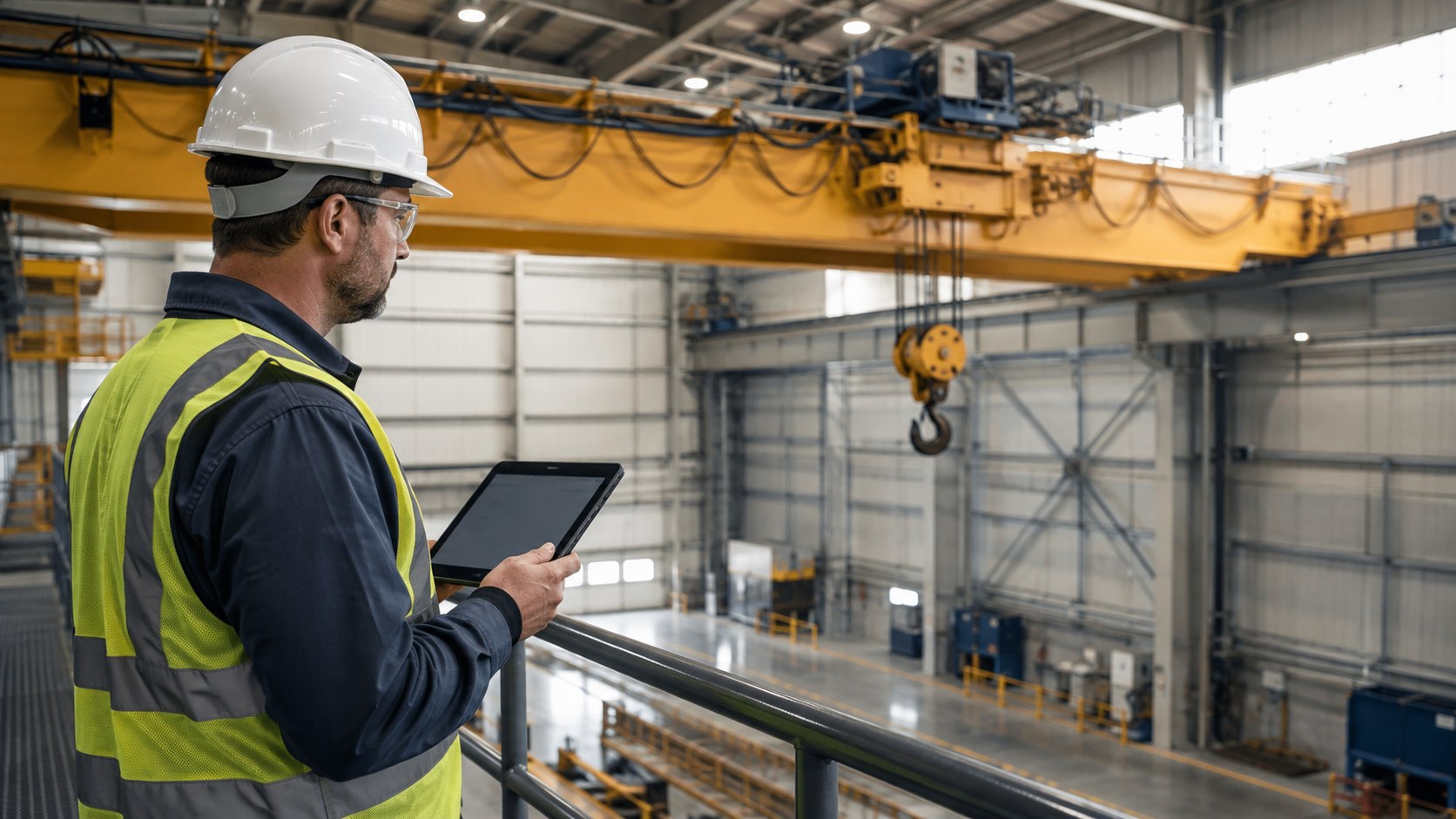
For companies operating in the crane inspection, service, maintenance and repair industry, compliance is not simply an administrative requirement. It is embedded in the work itself.
Every inspection, service visit, deficiency, repair, technician sign-off and equipment record can become part of the compliance trail. Yet many crane businesses still manage portions of that information across paper forms, spreadsheets, accounting software, email and disconnected field-service systems.
That creates a fundamental problem: the more fragmented the operating environment, the harder it becomes to maintain a complete, accessible and defensible record of the work performed.
This is where FoundryOS, leveraged through CrewOS, offers a different approach.
CrewOS is the off-the-shelf side: an operating platform a crane company can run today, with quoting, scheduling, dispatch, compliance and invoicing in one system. FoundryOS is the software studio behind it, and it builds custom operational software when an off-the-shelf tool does not fit, connects the systems worth keeping, and integrates governed AI. So a crane business is not choosing between generic software and a custom build from scratch. It runs the CrewOS foundation, and FoundryOS builds the crane-specific layer on top.
Rather than forcing a crane company to adapt its operations to software, FoundryOS can extend the CrewOS operating platform with crane-specific workflows, inspection processes and compliance functionality tailored to the organization and the standards under which it operates.
The result is not simply another field-service application. It is the opportunity to create a purpose-built digital operating and compliance environment for crane businesses in both Canada and the United States.
Start with the operational backbone
CrewOS already provides the underlying workflow required to manage a service business from quote through payment.
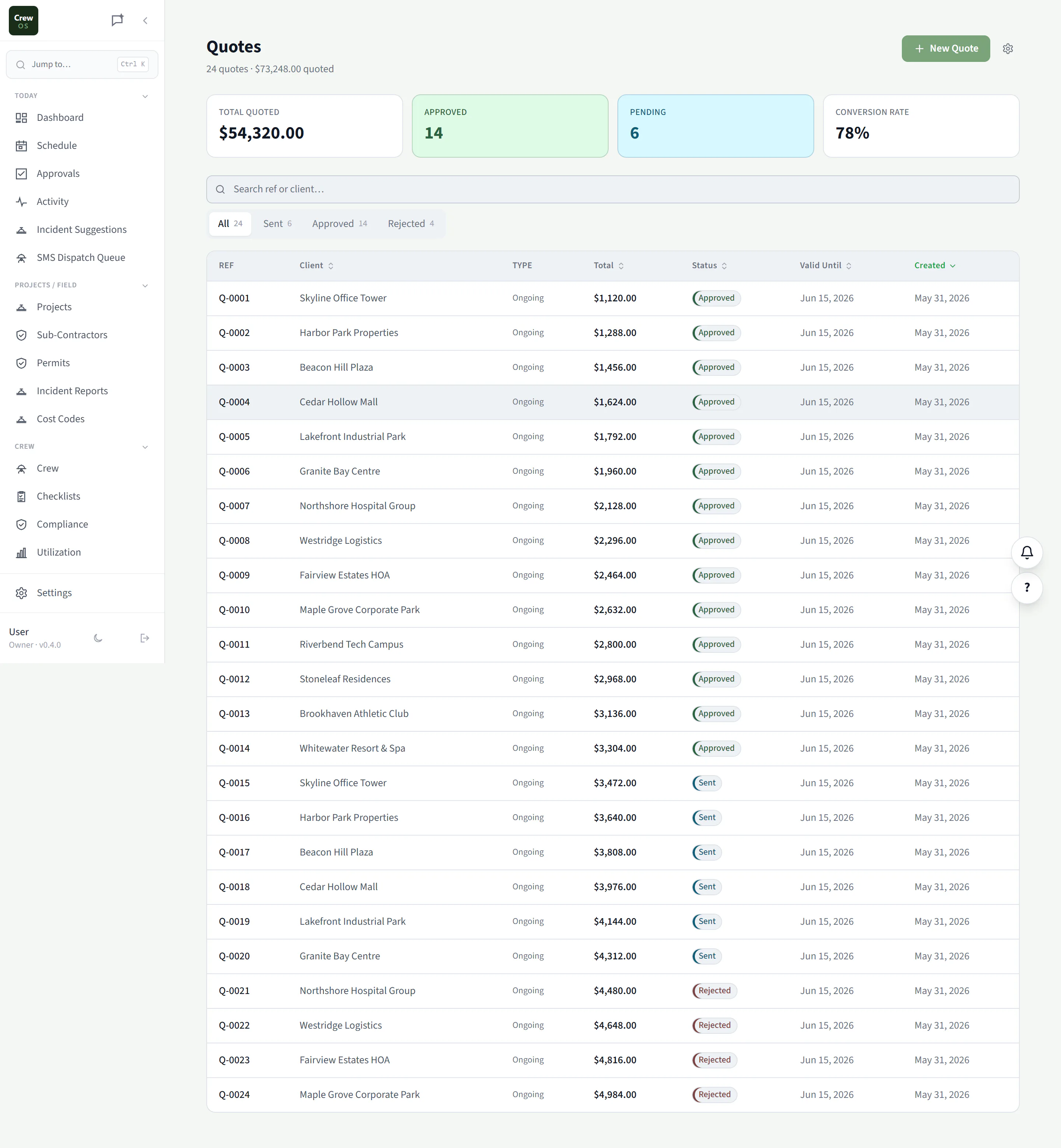
The Overhead Crane Solutions product walkthrough demonstrates a connected workflow in which a quote can include inspection, repair and load-test work; an approved quote converts directly into a scheduled job without re-entry; and crews can then be scheduled and dispatched from a centralized board.
For crane businesses, that foundation is significant because compliance does not happen separately from operations. It happens inside the job workflow.
A technician needs the right inspection process when arriving on site. The company needs to know which asset was inspected, what was found, who completed the work, what deficiencies were identified and what happened next.
CrewOS provides the operational foundation; FoundryOS provides the ability to build the specialized crane layer on top of it.
Put compliance into the technician's hands
One of the biggest opportunities is moving compliance documentation directly into the field workflow.
Technicians can use their phones to access the day's jobs, clock in and out, and complete crane service reports while on site.
Instead of completing paperwork that later has to be entered, scanned, filed or reconciled, the technician can capture information as the work occurs.
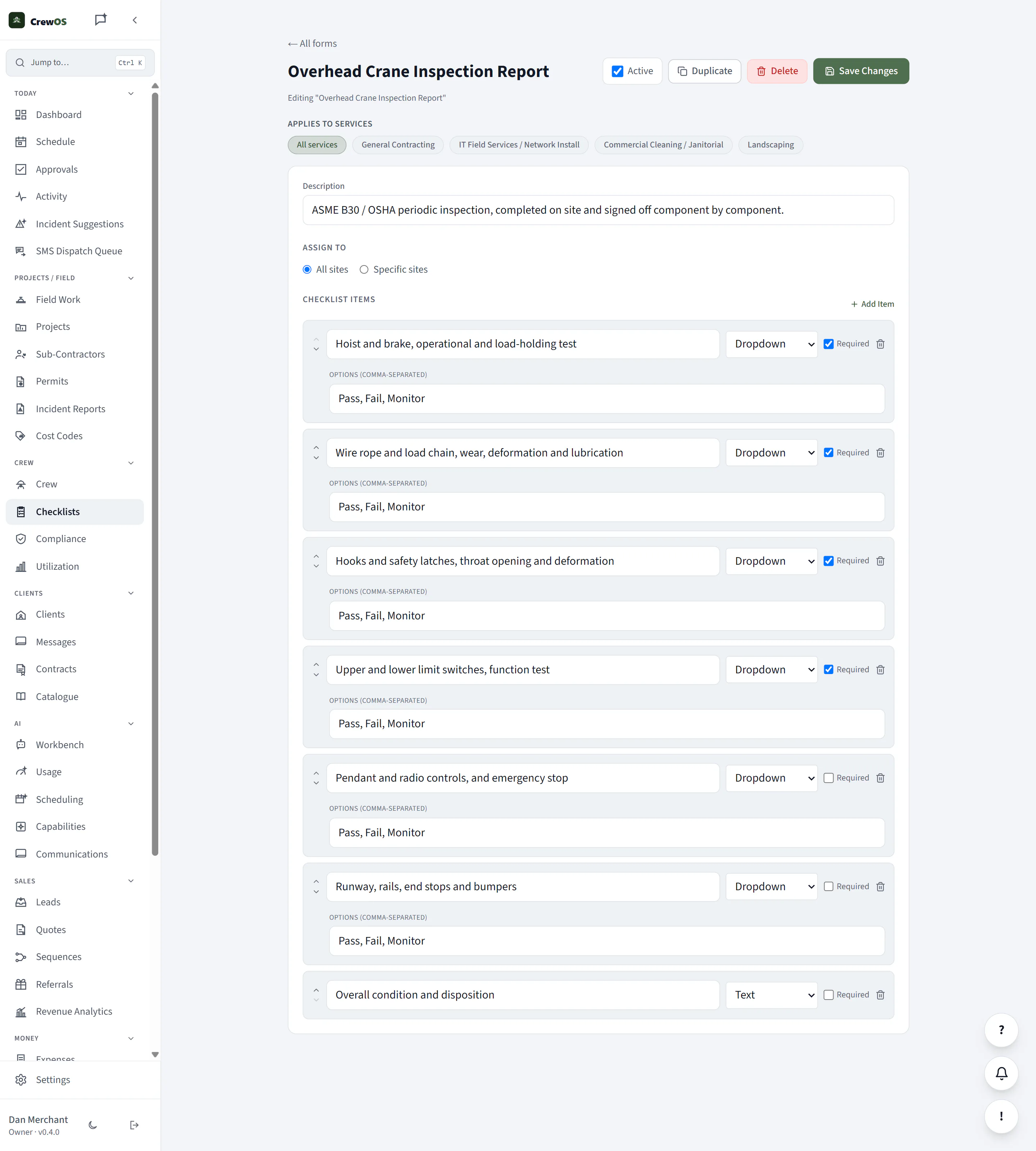
CrewOS also supports configurable checklists. The walkthrough specifically describes an Overhead Crane Service Report that can be edited field by field and indicates that ASME and OSHA versions can be built around the company's actual inspection process.
For companies operating across Canada and the United States, this configurability becomes particularly valuable.
Rather than assuming that one inspection form or workflow fits every jurisdiction, FoundryOS can create tailored compliance processes around the applicable requirements and the company's own procedures. The crane-specific roadmap in the walkthrough explicitly identifies ASME, OSHA and CSA inspection checklists, including component-level pass/fail reporting and signature capture.
That means the platform can be designed around the standards and workflows relevant to the organization rather than relying on a static, generic inspection form.
Give every crane and hoist a digital history
Compliance becomes considerably easier to manage when the system is organized around the equipment itself.
The proposed crane-specific CrewOS build includes an equipment and asset register, where every crane and hoist becomes a tracked unit with its own:
- service history;
- inspection intervals; and
- next-due dates.
This changes the operating model.
Instead of asking, "Where is the inspection report for this crane?" the business can work toward a centralized digital record for the asset.
That creates a clearer chain between the customer → site → asset → inspection → deficiency → repair → service history.
The existing CrewOS job record already captures work performed, submitted daily logs and service history by site. The crane-specific asset layer can take that traceability further by connecting inspection and maintenance information to individual equipment.
Turn deficiencies into action
Capturing a deficiency is only half of the compliance equation.
What happens next matters.
The proposed crane-specific workflow addresses this directly: a failed inspection item can become a priced field repair quote tied to the asset before the technician leaves the site.
Consider the operational difference.
A traditional process might involve a technician documenting a deficiency, returning paperwork to the office, having administration interpret the report, creating an estimate, contacting the customer and then scheduling the repair.
Each handoff introduces delay and the possibility of information being missed.
A connected CrewOS workflow can instead create a direct path:
Inspection → Deficiency → Quote → Approval → Repair → Updated Asset History
That is more than workflow automation. For a crane service organization, it can help make compliance findings visible, actionable and traceable.
It can also create a commercial advantage: identified repair work can move into the sales and service workflow faster rather than remaining buried in inspection reports.
Create a stronger audit trail
CrewOS is designed to retain information as work moves through the system.
Every service visit can land on the job record, including work performed and submitted logs. Quotes can flow into jobs, jobs into invoices, and financial information can synchronize with QuickBooks rather than requiring duplicate entry.
Clients can also access a portal containing job status, quotes, invoices and payments.
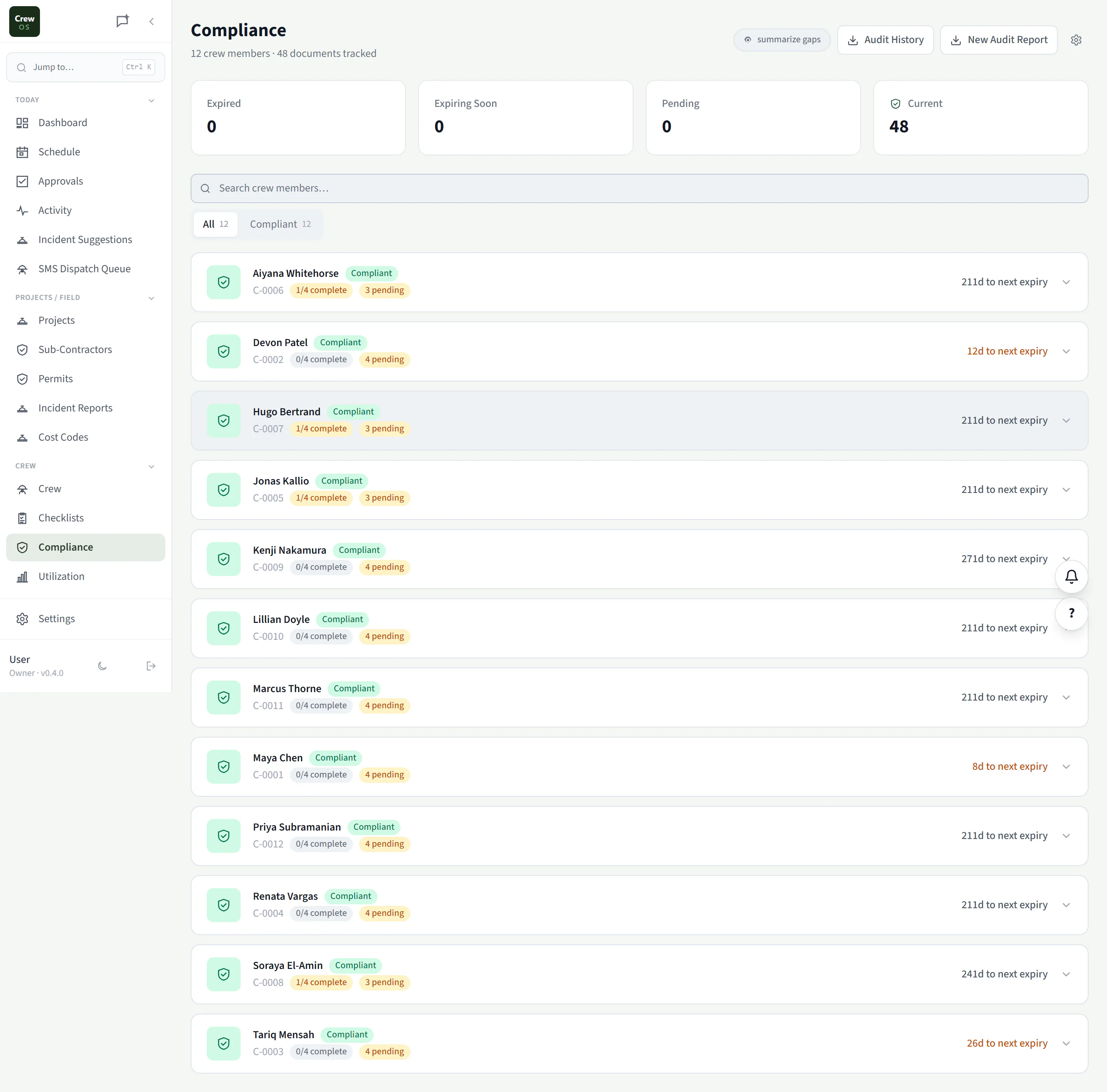
For crane businesses, the larger opportunity is to connect the operational record with the compliance record.
Instead of compliance information existing as an isolated document, it can become part of a structured history of what was inspected, what was identified, what corrective work was recommended and what subsequently occurred.
Canadian and U.S. operations require flexibility
Crane compliance is not a single universal checklist.
Requirements can differ according to country, jurisdiction, equipment, application, inspection type and the standards applicable to the work.
That is precisely why configurability matters.
FoundryOS can build the crane-specific layer around the requirements relevant to a particular organization—including workflows based on CSA in Canada and OSHA/ASME-related requirements in the United States, where applicable—while also reflecting the company's internal inspection, approval, documentation and escalation procedures.
The objective should not be to claim that software itself creates compliance. Ultimately, the crane company remains responsible for determining the regulatory and standards requirements that apply to its operations.
The value of FoundryOS and CrewOS is different: the system can be configured to help operationalize those requirements consistently.
From field-service software to a crane operating system
The strongest case for CrewOS in the crane industry is not one individual feature.
It is connectivity.
A crane company can bring together quoting, scheduling, dispatch, technician mobile workflows, inspection checklists, service records, invoicing, customer visibility and financial integration within one operational environment. The crane-specific FoundryOS layer can then add equipment registers, inspection schedules, standards-based checklists and deficiency-to-repair workflows.
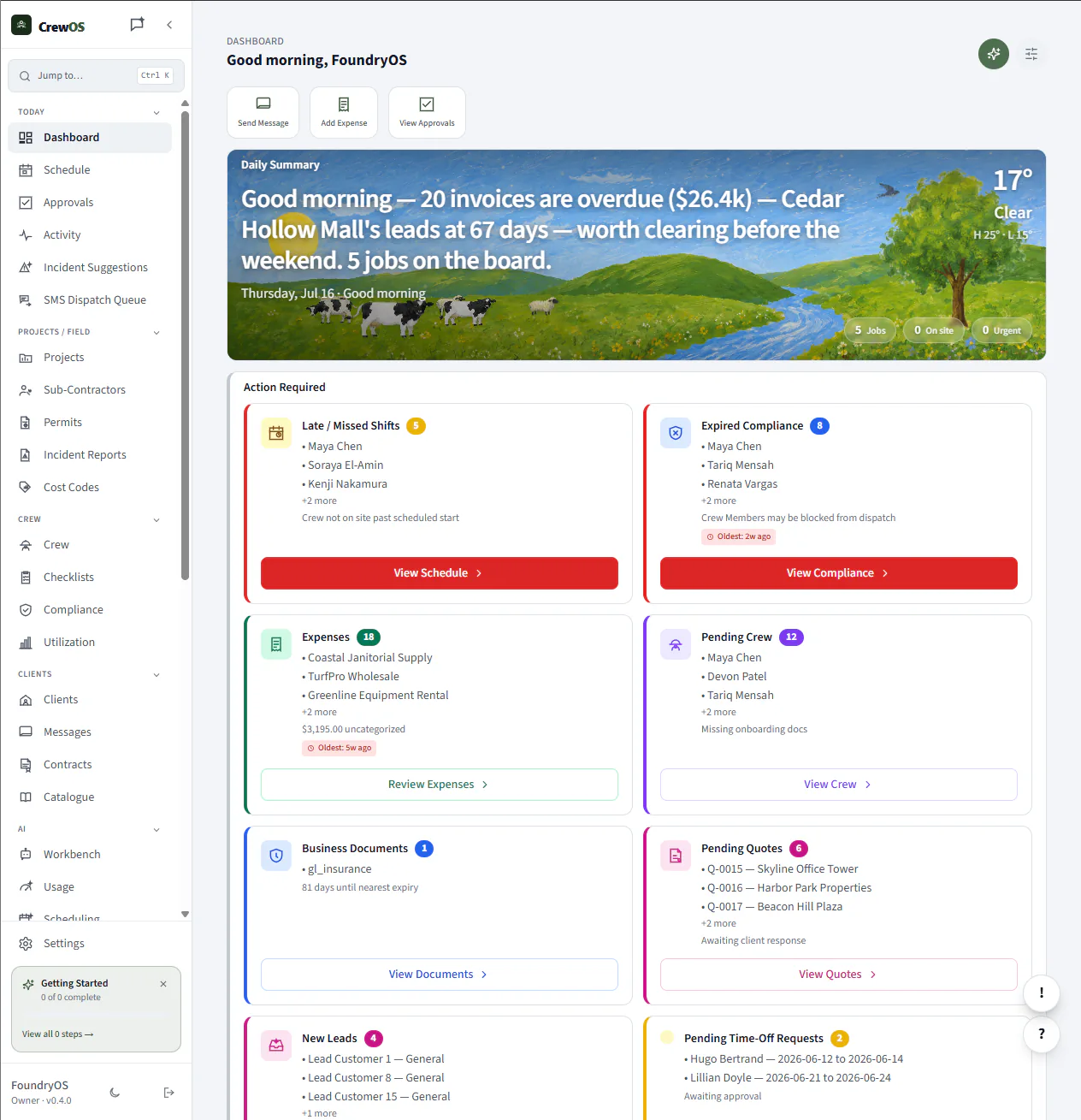
Management also gains centralized visibility. The CrewOS owner's dashboard is designed to surface what needs attention, the day's schedule, active jobs and crew status in one screen.
For an industry where safety, documentation and operational accountability are inseparable, that is an important distinction.
You don't necessarily need to find software built for every variation of your crane business. You can build the crane-specific operating layer your business requires.
That is the FoundryOS advantage.
CrewOS provides the operational foundation. FoundryOS tailors it to the business—including the compliance workflows that help crane companies operate with greater visibility, consistency and control.