Know a property was cleaned, with evidence, before the client tells you it wasn't.
The schedule says the property was serviced. That is not the same as knowing it was. CrewOS shows live status on every scheduled clean and pairs it with completion evidence, so the gap between scheduled and done stops being invisible.
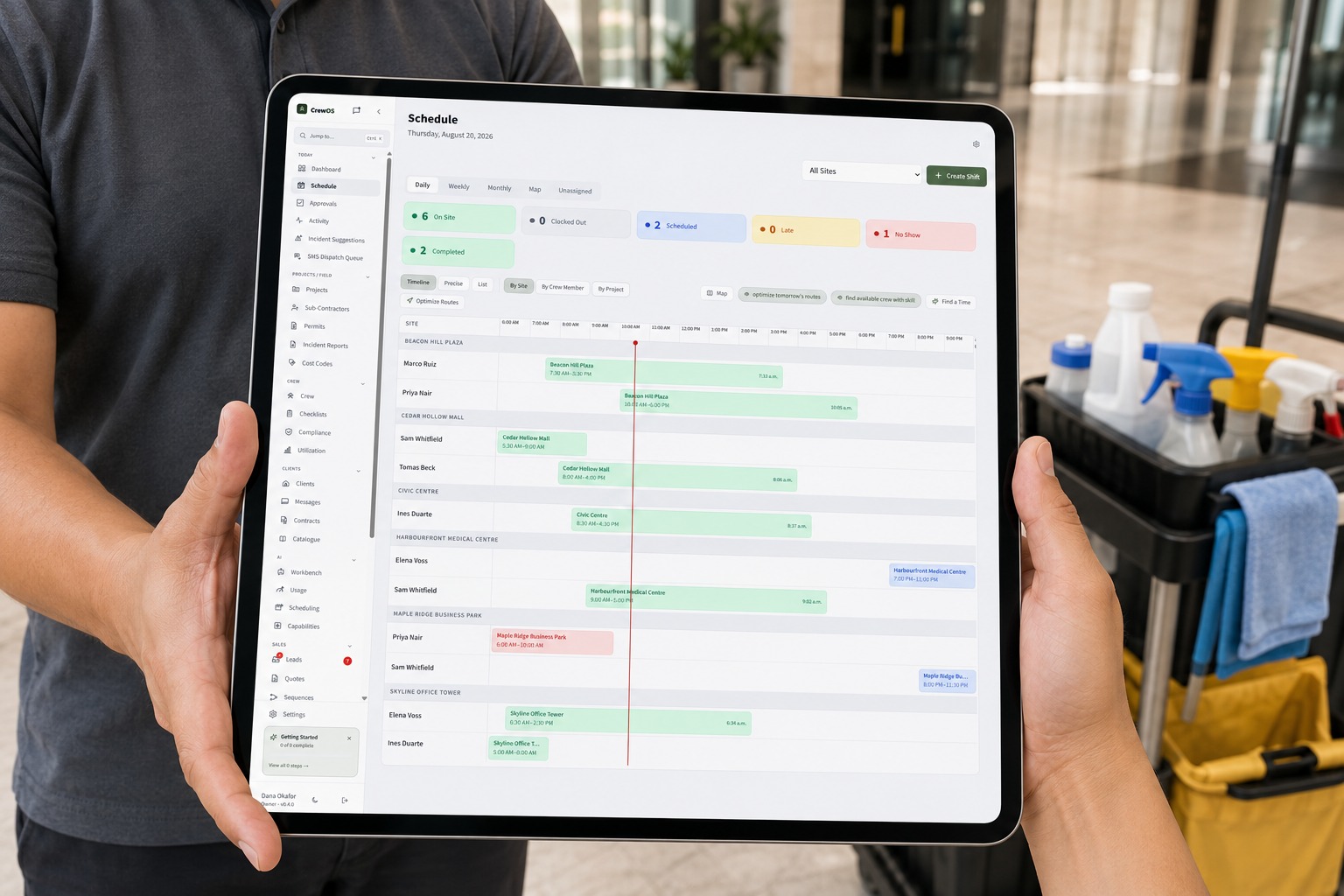
Management believes a property was serviced. It was not.
A no-show, a partial clean, a skipped scope. The schedule still shows it as done, because the schedule is a plan, not a record of what happened. The first person to notice is often the client.
An unserviced site you invoiced is a disputed invoice and a lost account.
The gap between scheduled and actually done is exactly where accounts churn. You cannot defend the invoice, you cannot explain the miss, and the client has already decided the problem is you.

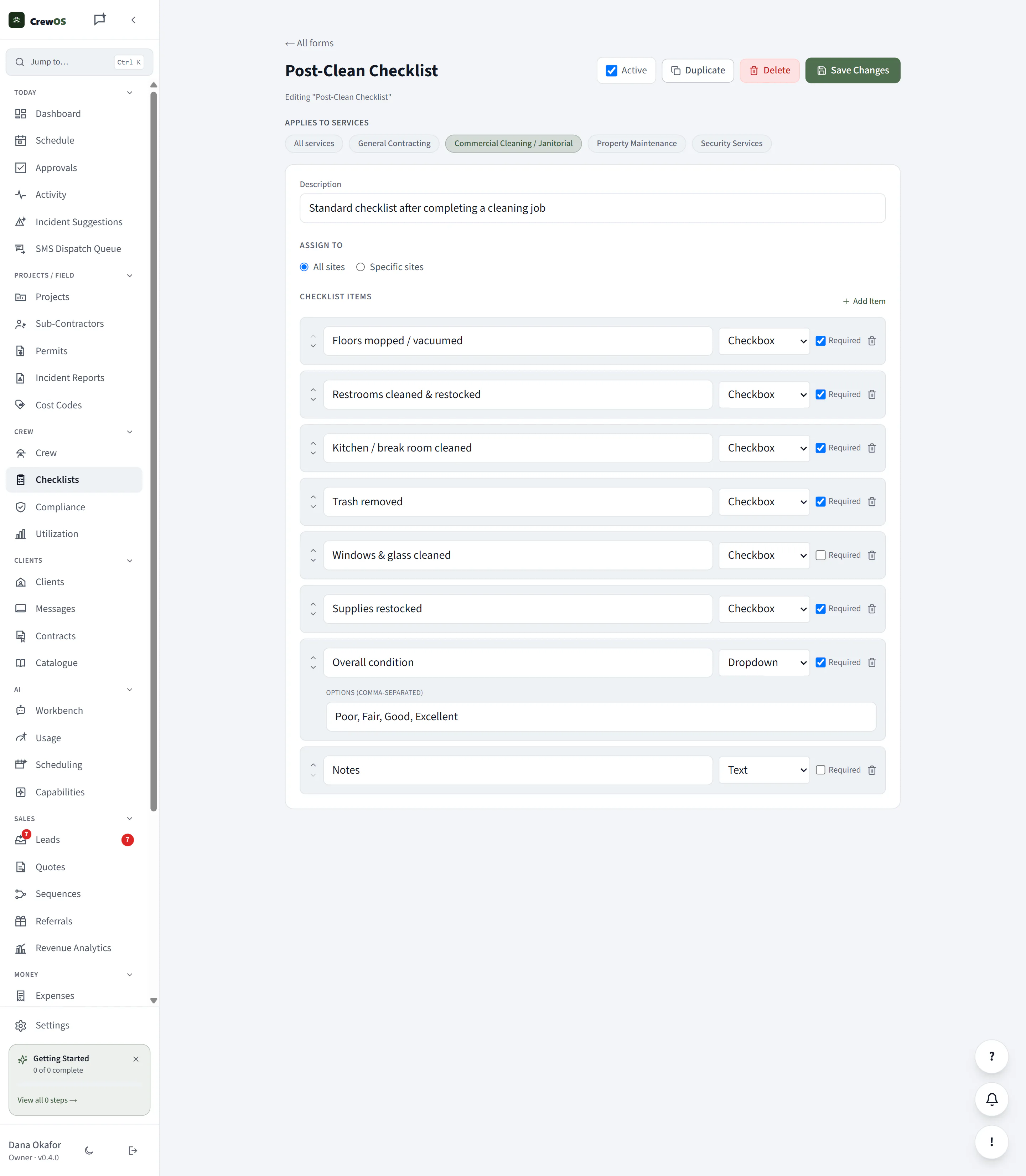
The checklist is yours to build, item by item.
You decide what gets checked, on which jobs, and how hard the system holds the line.
Attendance and completion are captured as the work happens, not entered afterward.
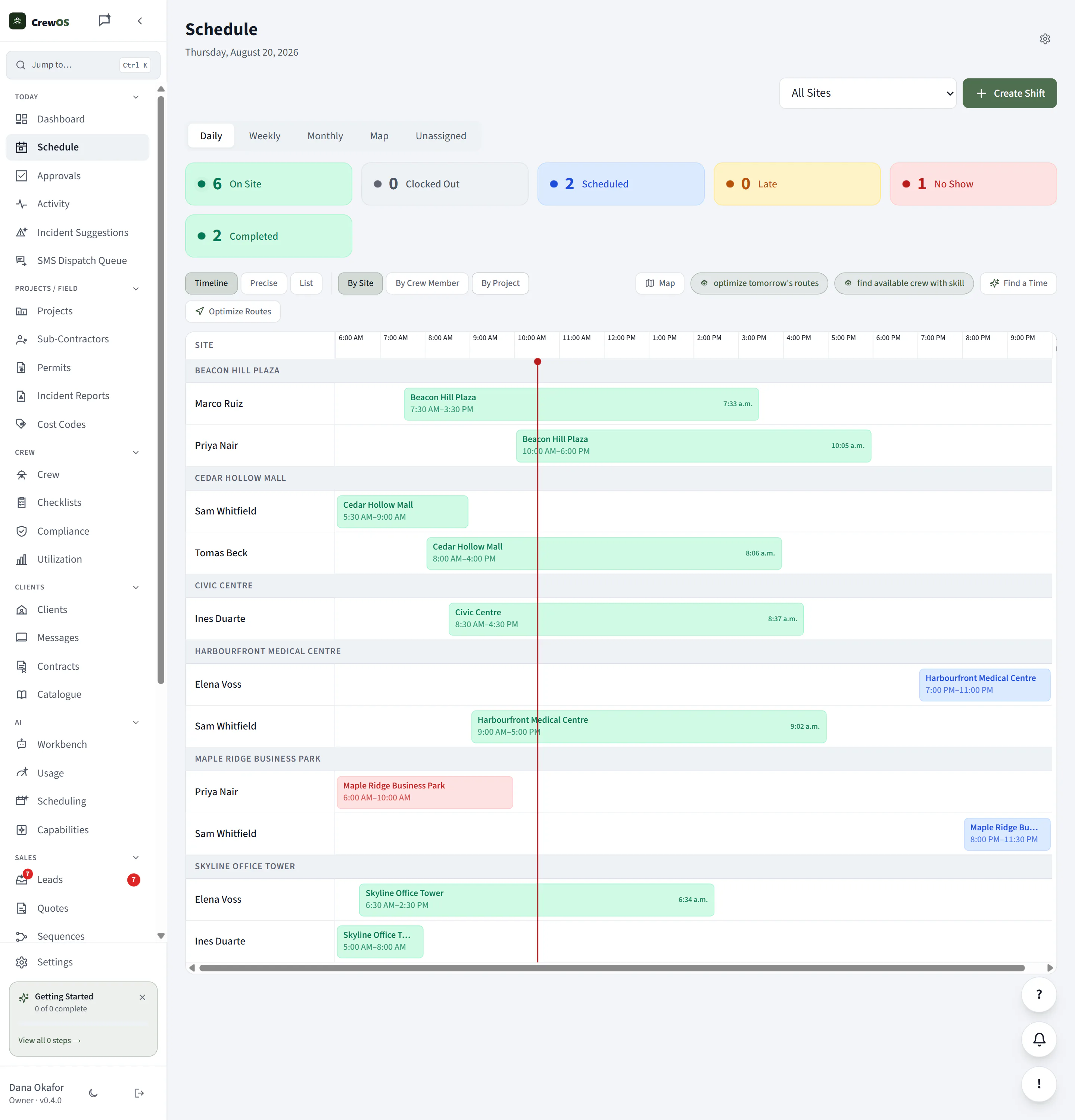
- 1The cleaner clocks in at the property, so the schedule shows On Site as a live fact, not a timesheet filled in later.
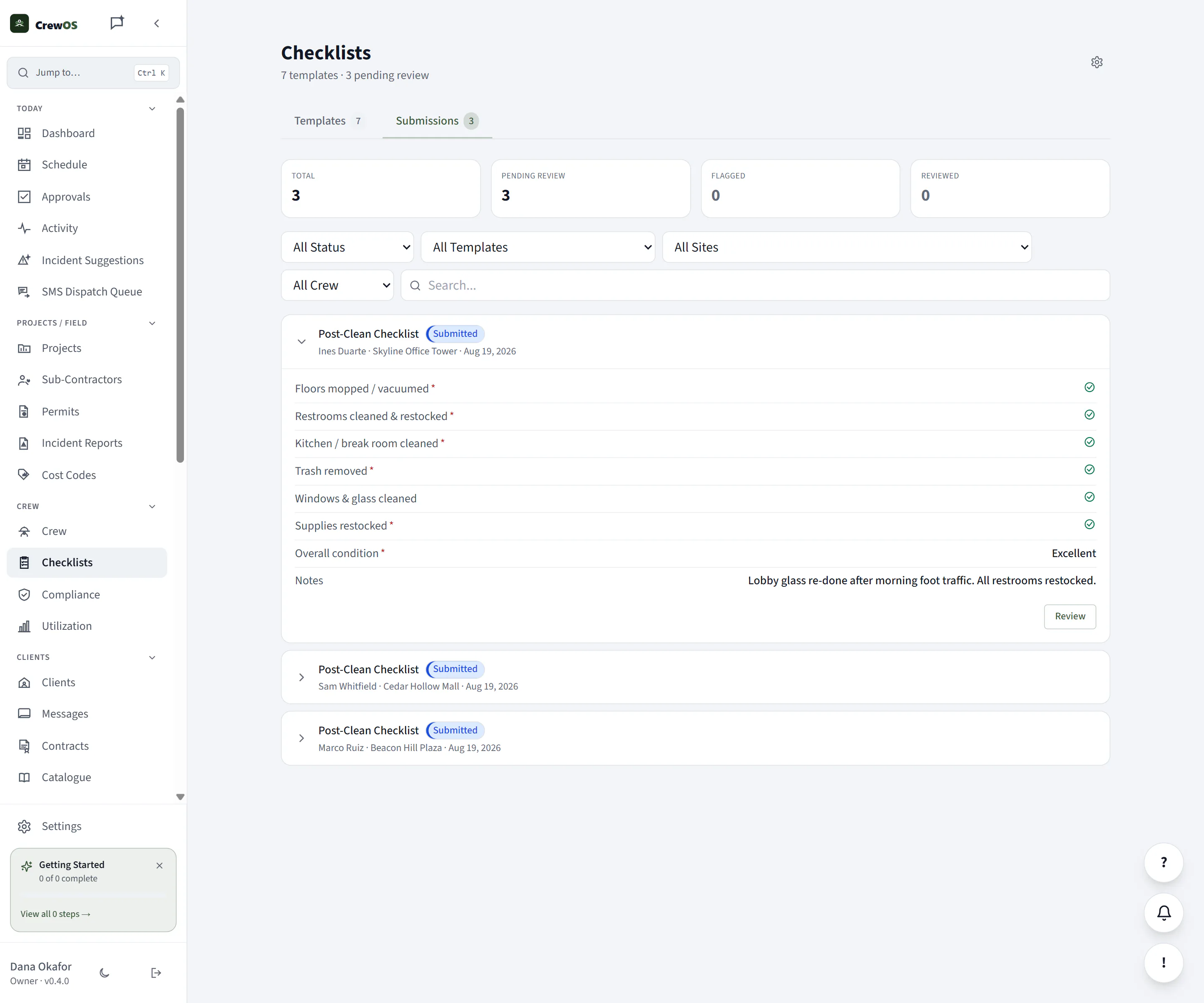
- 2A completion checklist is submitted from the property, so the defined scope is recorded as done rather than assumed.
- 3The exceptions surface themselves. A clean sitting at Late or No Show, or one with no completion submitted, is visible while you can still act on it.
See it happen.
How do I know a cleaning crew actually showed up and finished the job?
CrewOS shows live status on every scheduled clean, so you can see which properties are On Site, which are running Late, and which are a No Show. Completion checklists submitted from the property turn we cleaned it into evidence you can open, per site and per visit.
Status updates as the crew clocks in and out at the property, not from a timesheet entered later, so the schedule reflects what is actually happening on the ground.
You know a property was serviced, with evidence, before the client has to tell you it wasn't.
The disputed-invoice conversation changes when you can open the record: on site at this time, completion submitted, exceptions handled. You defend the work with evidence, not your word against theirs.