Fire protection and life safety operations

Prove every fire system was inspected, on time, by a certified inspector.

An inspection with no record is a liability waiting for an audit or an incident. CrewOS captures each inspection as it happens, a dated report with the tests run and the deficiencies found, filed by a certified inspector, so "we inspected it" becomes a record you can open, not a claim you have to defend.
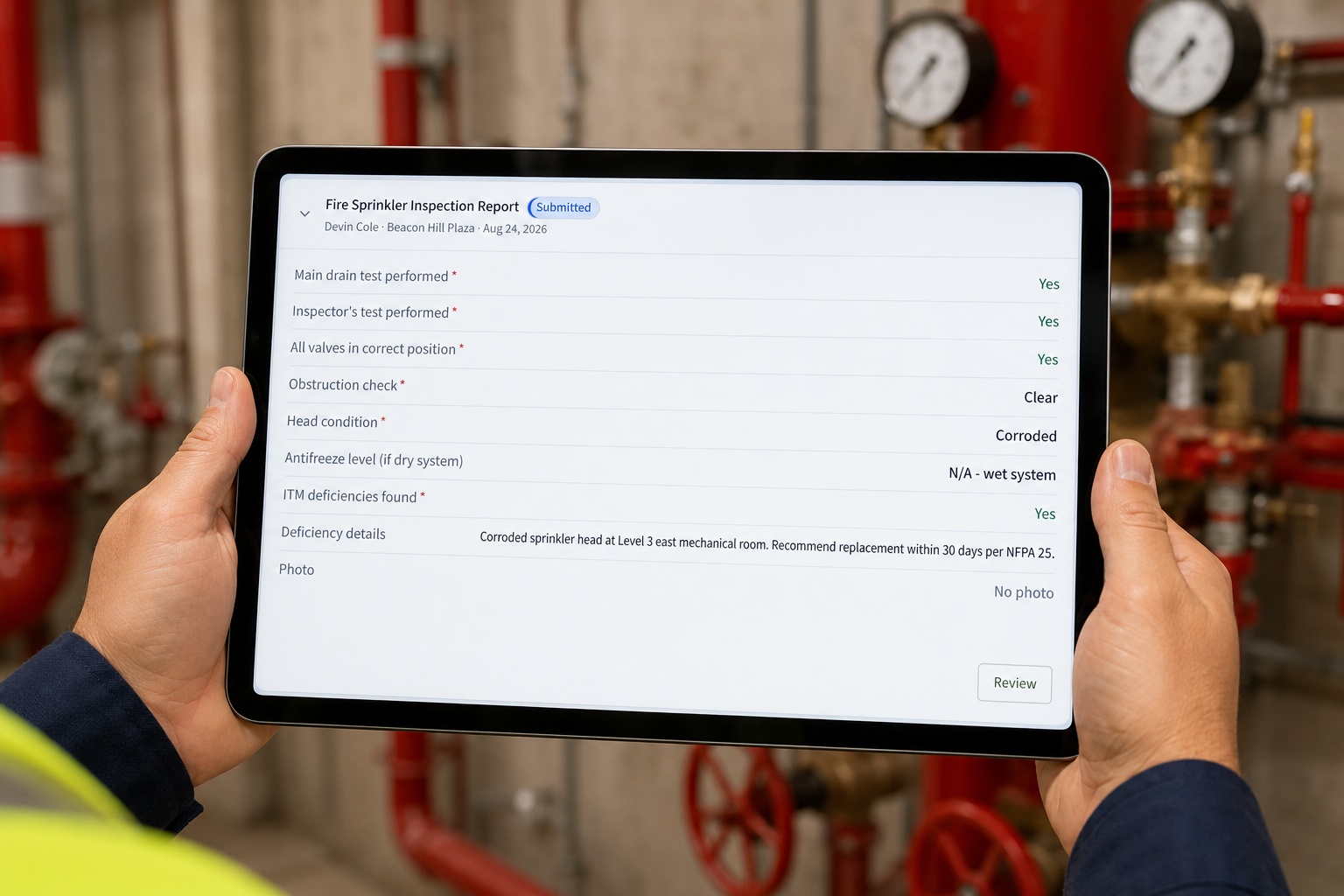
A fire protection inspector in a hard hat holding a tablet that shows a CrewOS fire sprinkler inspection report, standing at a red sprinkler riser in a building mechanical room
The expensive failure

An inspection happens, but there's no record to prove it.

The inspector runs the tests, notes a deficiency on paper, and the report never makes it back to the office, or the tech who signed it was not certified for the work. On the schedule the building is inspected. If a system fails, or an auditor asks, there is nothing to show for it.

What it costs

The inspection you can't prove is the one that costs you.

A fire system that fails when it is needed, or an AHJ audit with no ITM records behind it, is not a disputed invoice. It is a life-safety exposure, a lost contract, and liability that lands on the company that signed off. On this vertical, the record is the whole product.
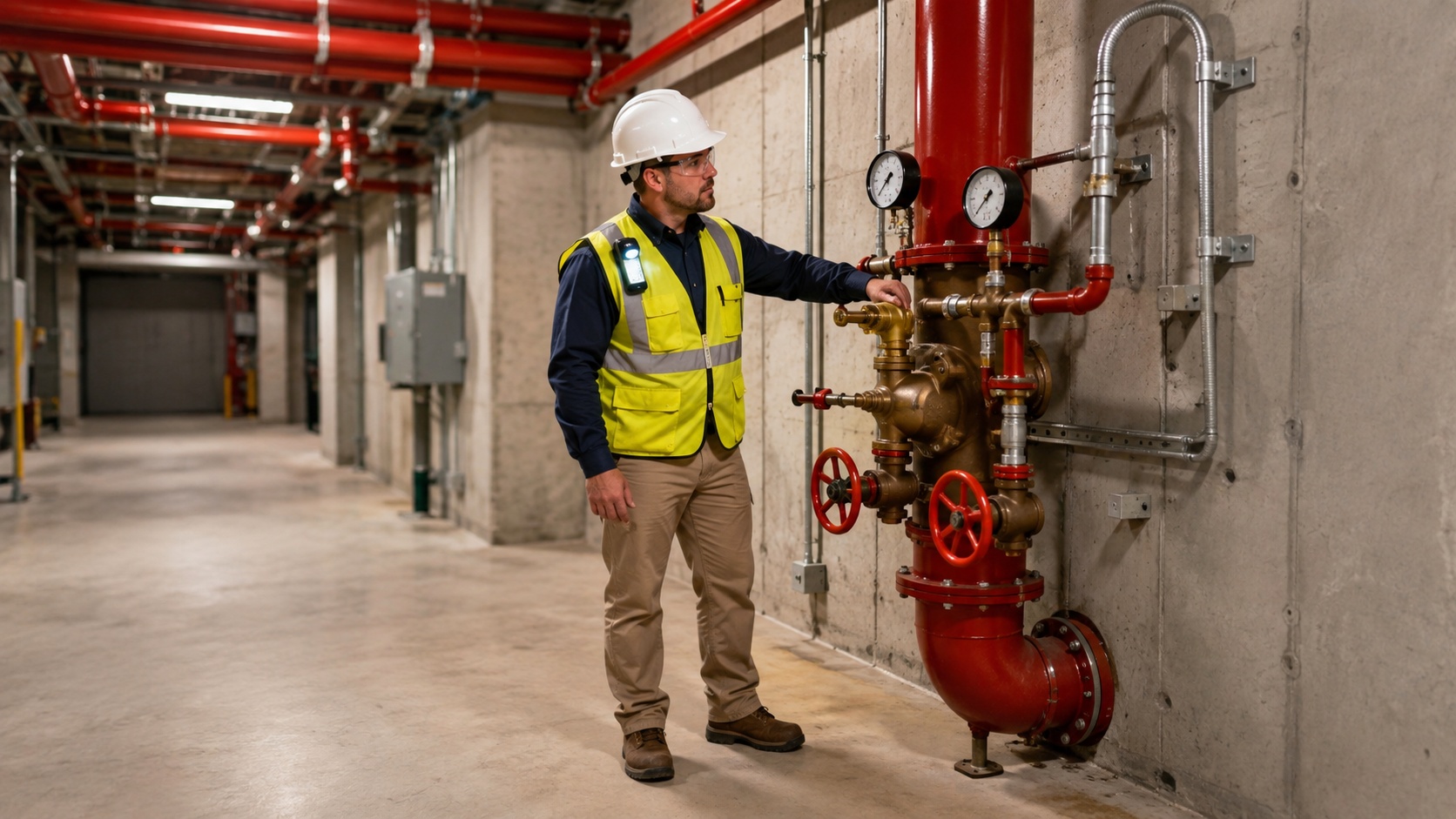
A fire protection inspector in a hi-vis vest checking the gauges and control valves on a red fire sprinkler riser in a building mechanical room
The check that only counts once it's on the record.
Operator control

The inspection report is yours to build, check by check.

You decide what gets checked, on which jobs, and how hard the system holds the line.
app.crewos.ca/forms
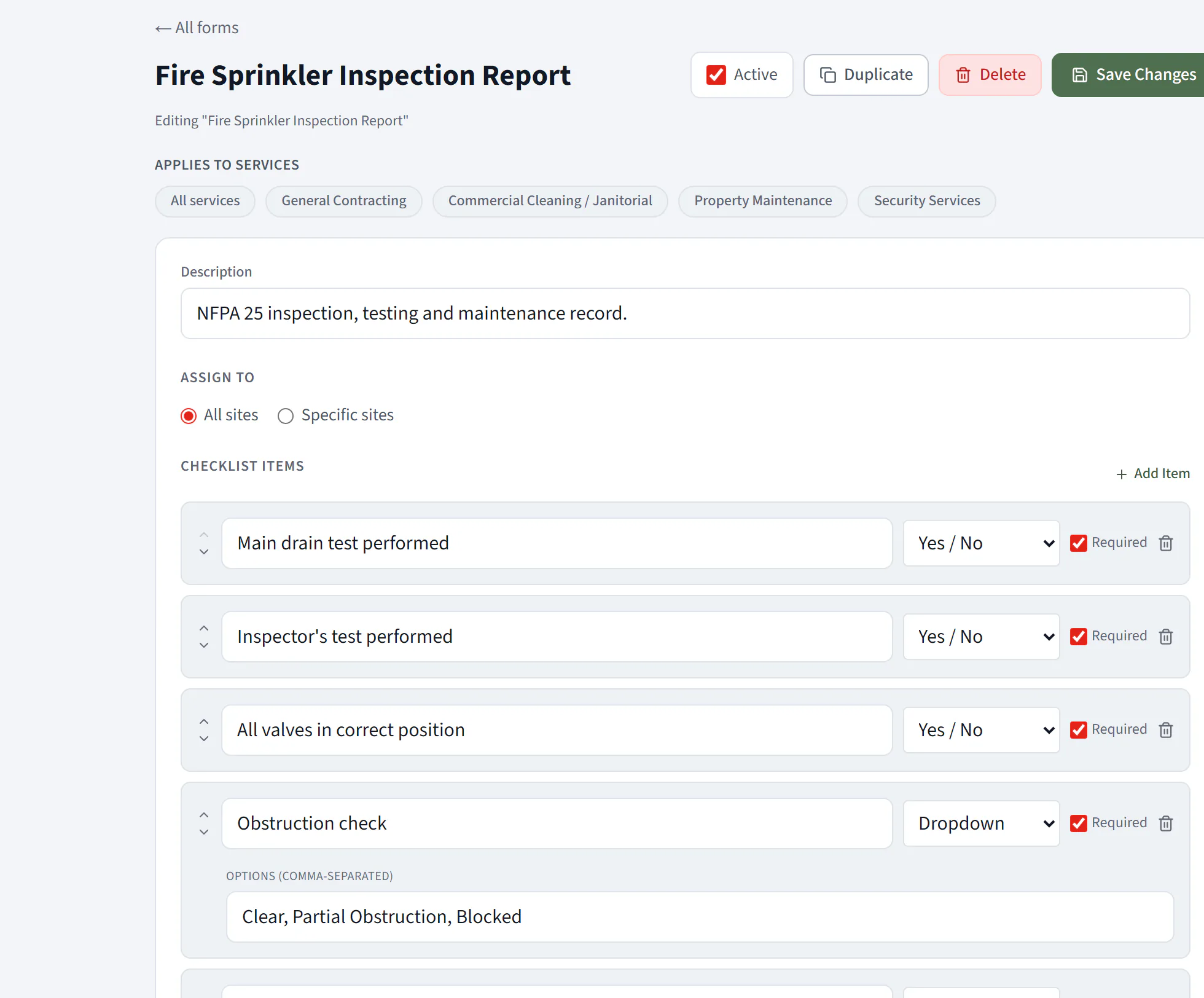
You build the inspection report. Add the ITM checks your systems and jurisdiction require, set the input for each and which are required, and it is the report every inspector fills from the field.
The inspection standard is yours to define, not a fixed template. Every building is held to the report you built, item by item.You build the inspection report. Add the ITM checks your systems and jurisdiction require, set the input for each and which are required, and it is the report every inspector fills from the field.
What the system can prove happened

The inspection is captured on site, by a certified inspector, as it happens.

  1. 1The inspector clocks in at the building and works the inspection report on the device, main drain test, valve positions, head condition, deficiencies, so the ITM record is captured on site, not written up later.
  2. 2Only a certified inspector can perform it, because CrewOS requires a current NICET or fire protection licence to clock into the inspection, so the record is filed by someone qualified to sign it.
  3. 3Each submitted report lands in a review queue with its date, building, and inspector, so a completed inspection is evidence you can open, and a deficiency is on the record the day it is found.
Real product, real screens

See it happen.

app.crewos.ca/forms
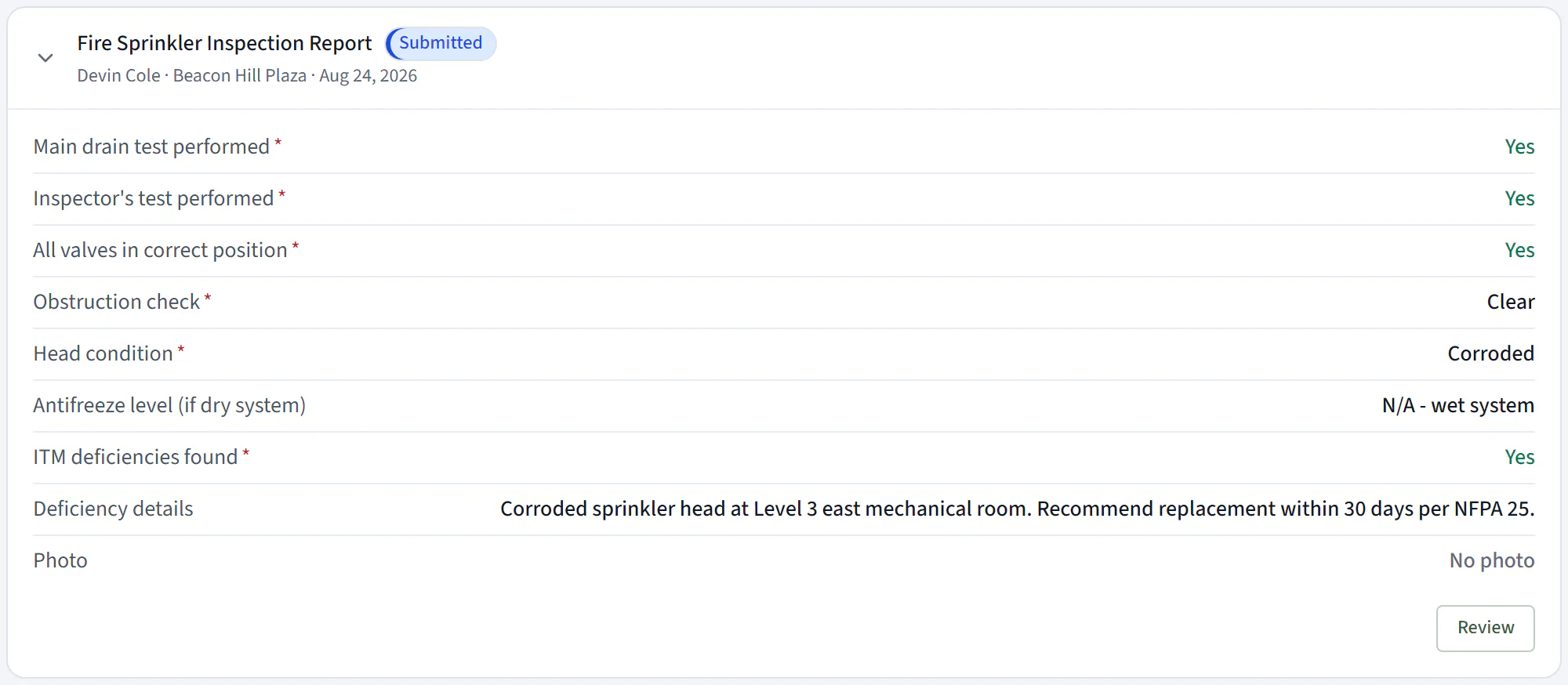
A real submitted inspection at Beacon Hill Plaza: main drain and inspector's tests performed, valves in position, and a corroded sprinkler head recorded as a deficiency with a note. Filed by the inspector, dated, and sitting in the review queue.
This is the inspection as evidence, not a claim. The tests, the condition, and the deficiency are captured on site, so a serviced system is provable before the fire marshal or insurer asks.A real submitted inspection at Beacon Hill Plaza: main drain and inspector's tests performed, valves in position, and a corroded sprinkler head recorded as a deficiency with a note. Filed by the inspector, dated, and sitting in the review queue.
The direct answer

How do I prove a fire sprinkler system was actually inspected?

CrewOS captures each inspection as a dated report submitted from the building, with the ITM tests run, the condition of the system, and any deficiencies found. Only a certified inspector can perform it, because a current NICET or fire protection licence is required to clock into the inspection. The submitted report lands in a review queue, so a completed inspection is a record you can open, per building and per visit.

The report is filled on site as the inspection happens, not written up afterward, and it carries the inspector, the building, and the date, so the record reflects what was actually tested.

The outcome

Every inspection is a record you can hand over, before anyone asks.

When the fire marshal audits or the owner questions a system, you open the report: inspected on this date, by this certified inspector, these tests run, this deficiency flagged. You defend the work with evidence, not your word, and the deficiency you found is on the record from the day it happened.

One platform, your words

Configured in Fire & Sprinkler terms, out of the box.

Crew memberInspector
ShiftInspection
ContractService Agreement
SiteBuilding
Required documentNICET certification
Questions

What operators ask before they switch.

Can CrewOS stop an uncertified tech from doing an inspection?
Where a certification is set as required for clock-in, yes. CrewOS checks the inspector holds a current NICET or fire protection licence before they can clock into the inspection, so an expired or missing credential stops the inspection instead of surfacing in an audit.
What happens to a deficiency found on an inspection?
It is recorded on the report as the inspector finds it, with the item, the condition, and a note, and the submitted report lands in the review queue with the deficiency on it. CrewOS puts the deficiency on the record from the day it is found; correcting it is your call, but it is no longer sitting on a paper form in a truck.
Is this just a digital checklist?
The checklist is the mechanism; the record is the point. Each inspection is submitted from the building with the tests run and the deficiencies found, filed by a certified inspector and dated, so it stands as evidence for the AHJ or the insurer, not just a box someone ticked.
Can I build the report to match my systems and jurisdiction?
Yes. You build the inspection report item by item, for wet or dry systems, alarm panels, or standpipes, and set which checks are required, so "inspected" means the ITM items you defined were run and recorded, not a generic template.

Run your crew like you've got it together. Because now you do.

Set up your first site in an afternoon. Free to start, no card required.