Prove the dry-out, with daily readings, before the adjuster shorts the claim.
On a restoration job, the documentation is the invoice. Miss the daily moisture readings, the category and class, or the photos, and the adjuster shorts the claim or denies it. CrewOS captures the loss assessment and a daily drying log from the loss site, so the file that gets you paid is built as the work happens, not reconstructed after the adjuster asks.
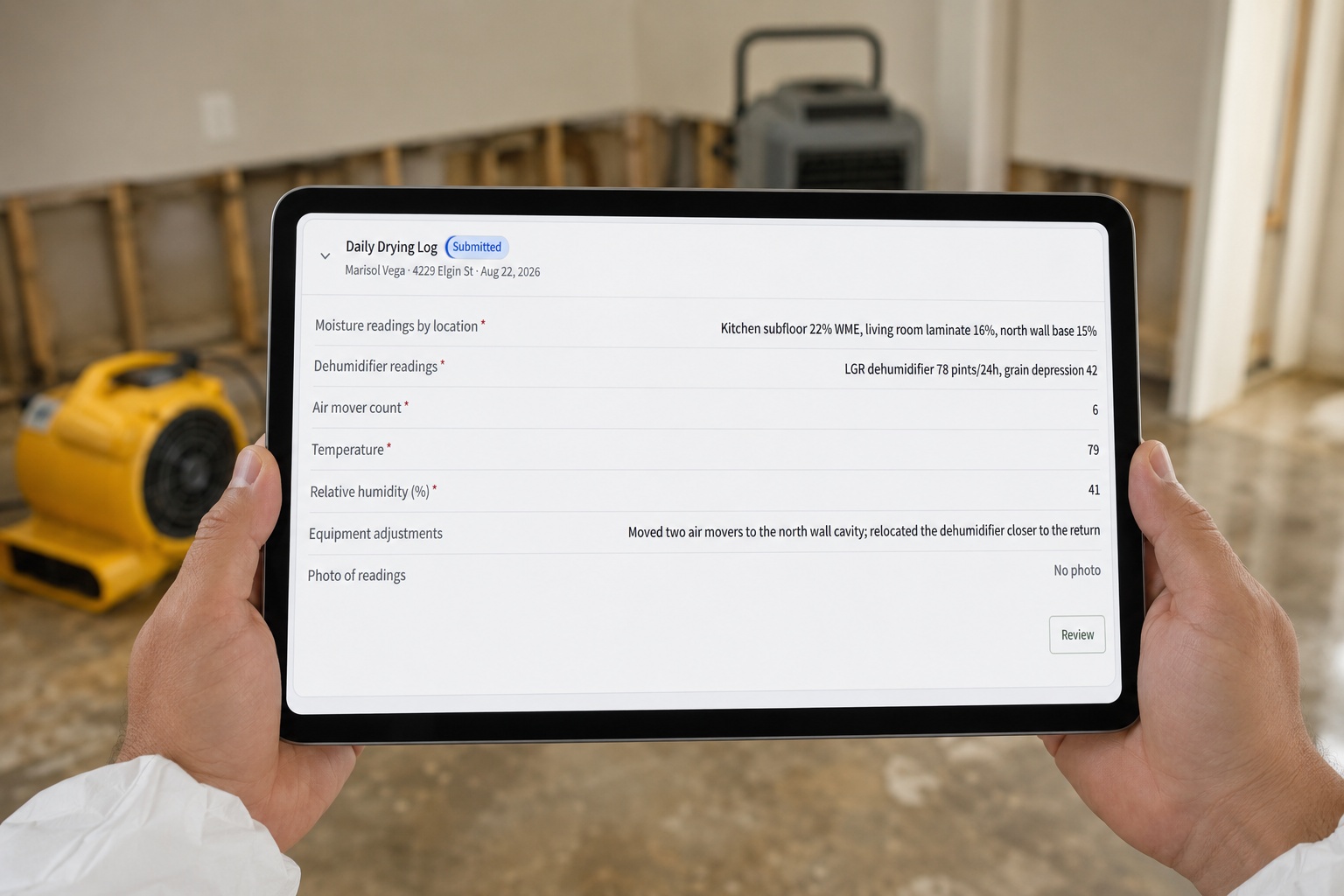
The work gets done, but the file won't support the claim.
The crew dries the structure, pulls the equipment, and moves on, but the daily moisture readings live in a tech's notebook, the category and class were never recorded, and half the photos are missing. The job is finished. The claim is not defensible.
An undocumented dry-out is a claim the adjuster shorts or denies.
The adjuster pays on the documentation, not the effort. Without the daily logs and the readings that show the structure was monitored to dry, the equipment days get cut, the invoice gets disputed, and the margin on the job goes with it. On restoration, the file is the product.
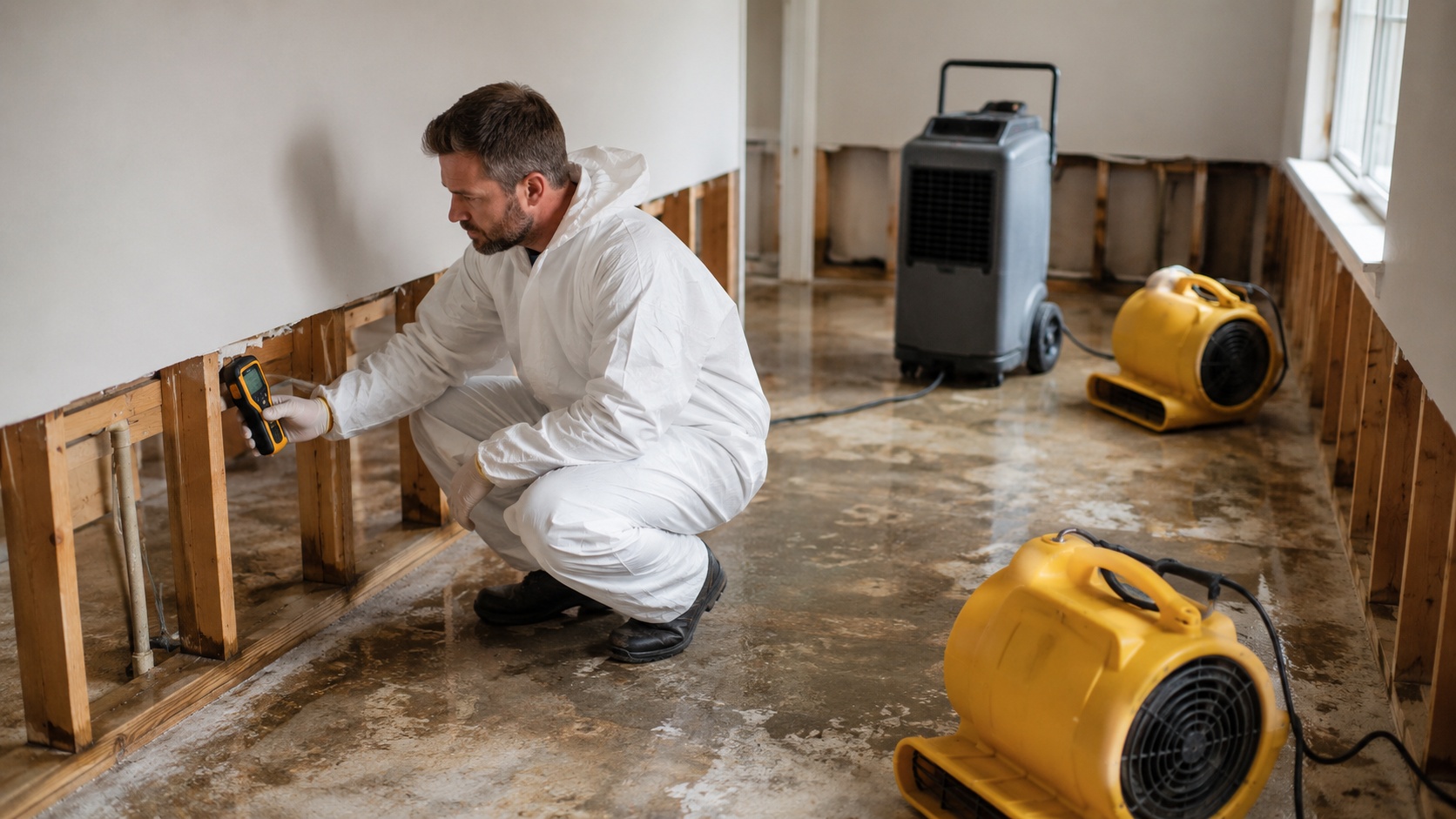
The loss is scoped and the drying is logged from the loss site, every day.
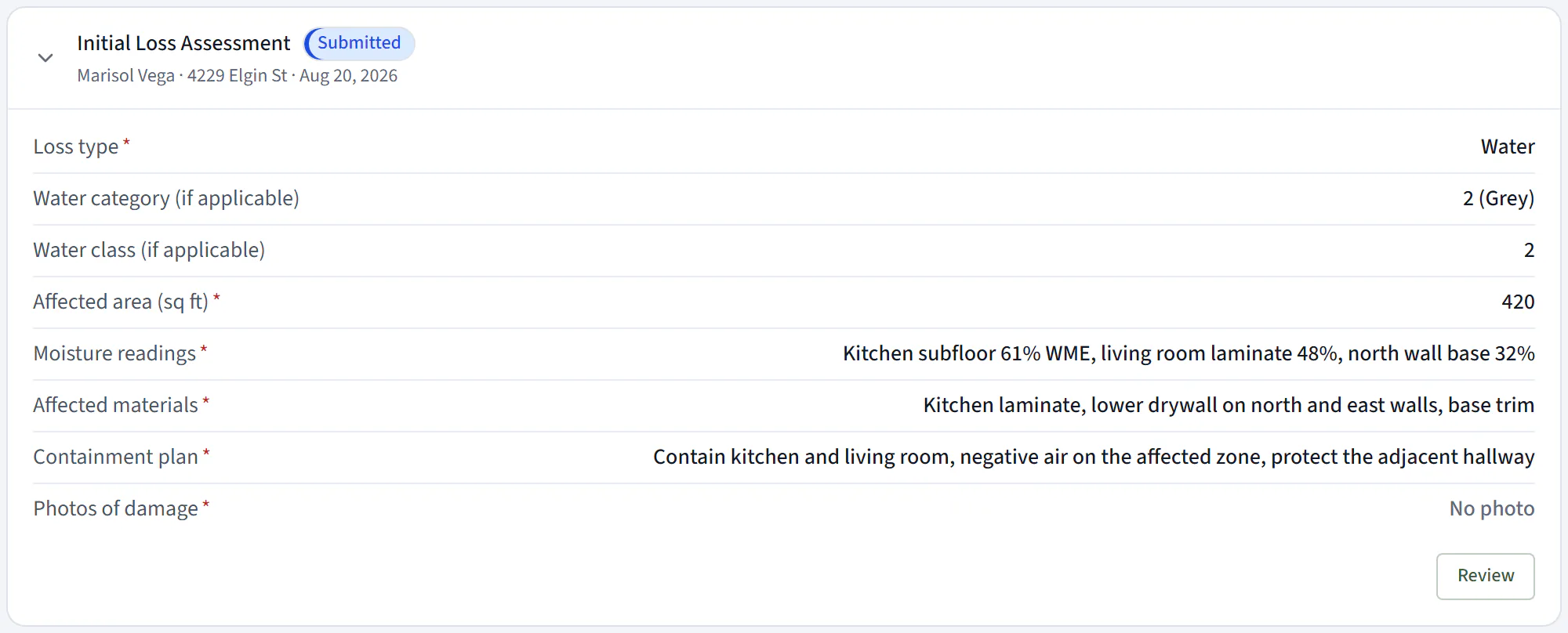
- 1The technician scopes the loss on site, loss type, water category and class, affected area and materials, moisture readings, and photos, so the claim starts with a documented category and scope, not a guess.
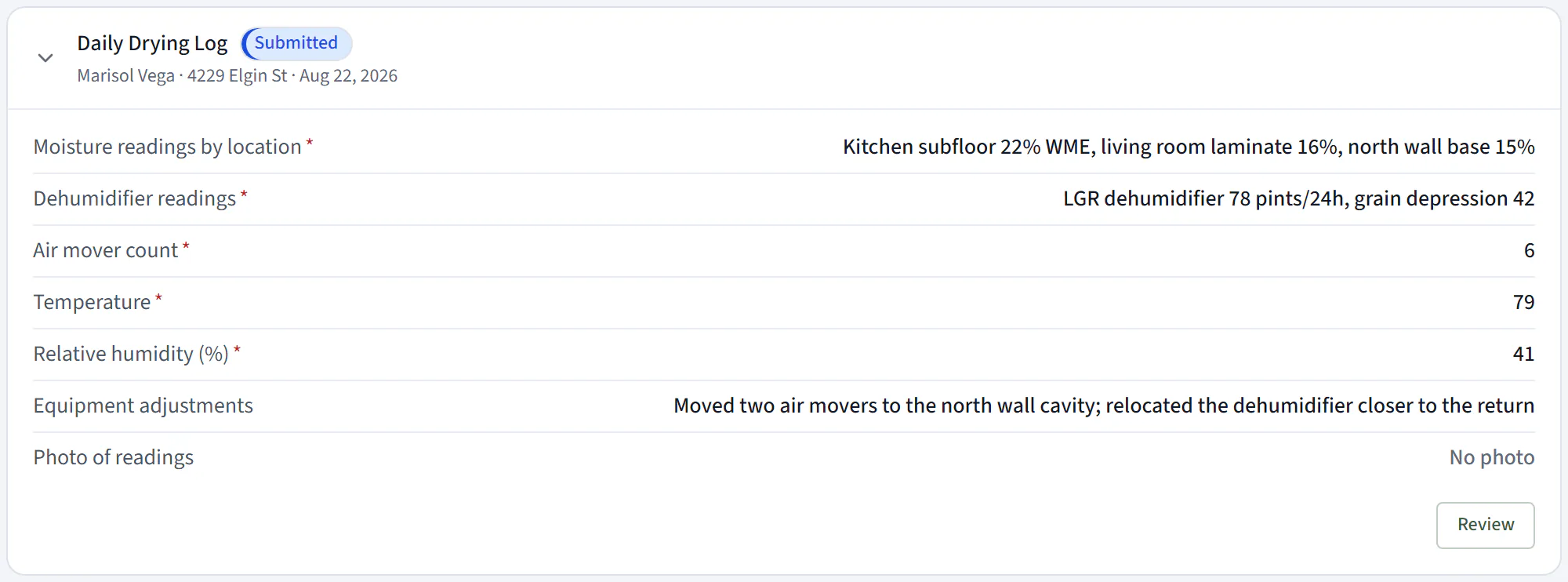
- 2Each day, a drying log is submitted from the site, moisture readings by location, dehumidifier and air-mover data, temperature and humidity, so the structure is shown being monitored to dry, day over day.
- 3Every assessment and log lands in a review queue with its date, loss site, and technician, so the file that supports the claim is complete before the adjuster asks for it.
See it happen.
How do I document a water damage job for the insurance claim?
CrewOS captures an initial loss assessment (loss type, water category and class, affected area, intake moisture readings, containment, photos) and a daily drying log (moisture readings by location, dehumidifier and air-mover data, temperature, and humidity) from the loss site. Each is submitted as a dated record tied to the site and technician, so the file that supports the claim is built as the work happens.
The readings and photos are captured on site, day by day, not reconstructed afterward, so the record shows the structure was monitored to dry, which is what the adjuster pays on.
The claim file is complete before the adjuster asks for it.
When the adjuster reviews the invoice, you hand over the file: the loss categorized, the structure monitored to dry with dated readings, the equipment logged, the photos attached. You get paid for the days you ran, because the drying is on the record, not in a notebook.