Snow and ice management operations

Prove the lot was cleared and salted, before the slip-and-fall claim.

A slip-and-fall claim lands months after the storm, and your defense is whatever you can prove about that night. CrewOS captures a service record for every property, every event, the arrival time, the snow depth, the salt applied, and the time you finished, so "we cleared it" is a timestamped record, not a driver's memory.
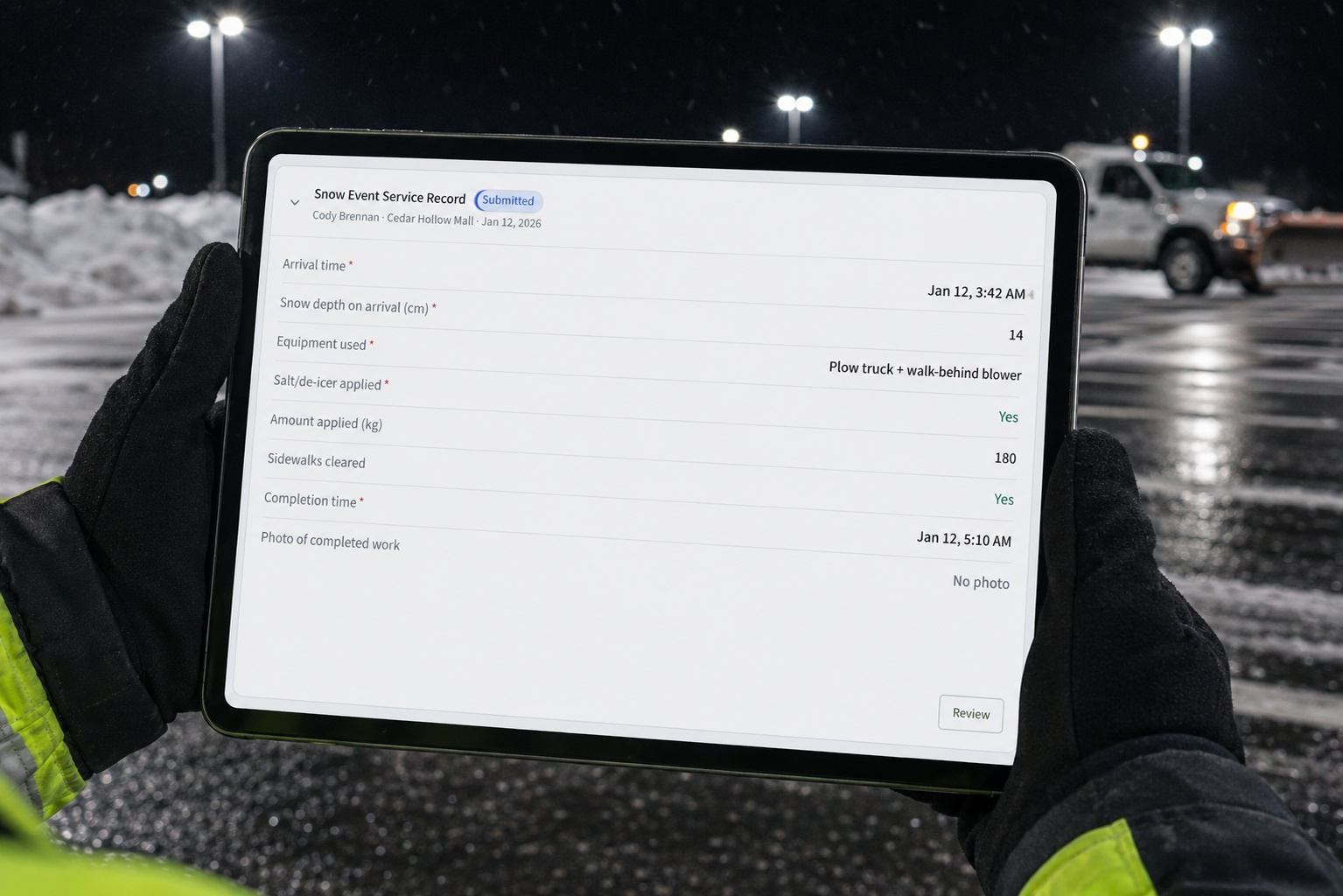
A snow removal operator holding a tablet that shows a CrewOS snow-event service record, standing in a cleared commercial parking lot at night with a plow truck and snow piles behind
The expensive failure

The slip-and-fall claim arrives months after the storm.

Someone slips in a lot you serviced in January, and the demand letter comes in April. Your defense is a driver's memory and a fuel receipt, with no record of when you arrived, how deep the snow was, whether you salted, or when you finished. That gap is where the settlement comes from.

What it costs

Without a record of the event, you settle.

Slip-and-fall claims are won and lost on contemporaneous documentation. If you cannot show the lot was serviced, salted, and cleared at the time, your insurer pays and your premium climbs, whether or not you actually did the work. The service you performed is worthless as a defense if it was never recorded.
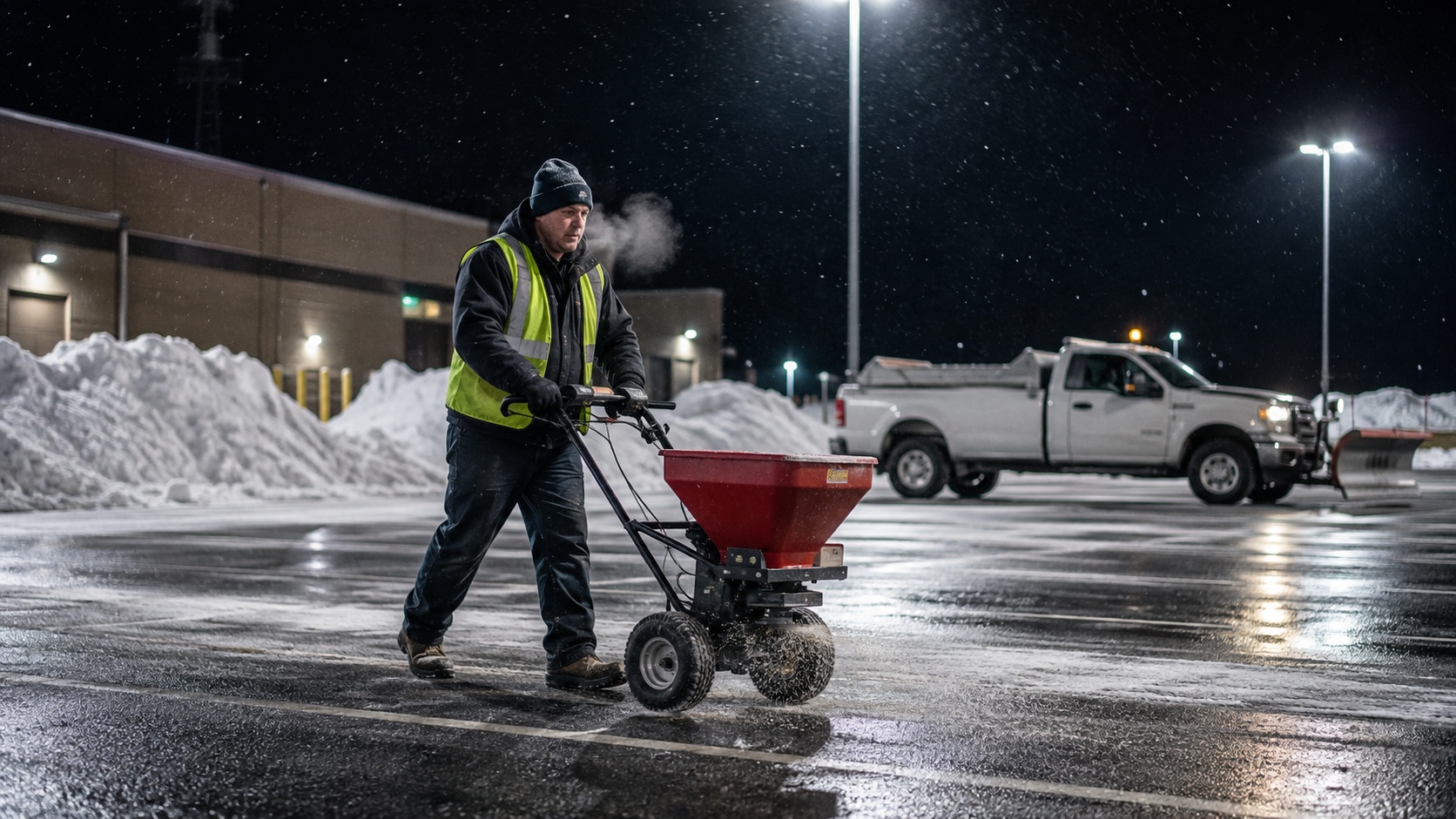
A snow removal operator pushing a walk-behind salt spreader across a cleared commercial parking lot at night, a plow truck and snow piles under the lot lights behind
The 3 a.m. clearing that only protects you once it's on the record.
Operator control

The service record is yours to build, field by field.

You decide what gets checked, on which jobs, and how hard the system holds the line.
app.crewos.ca/forms
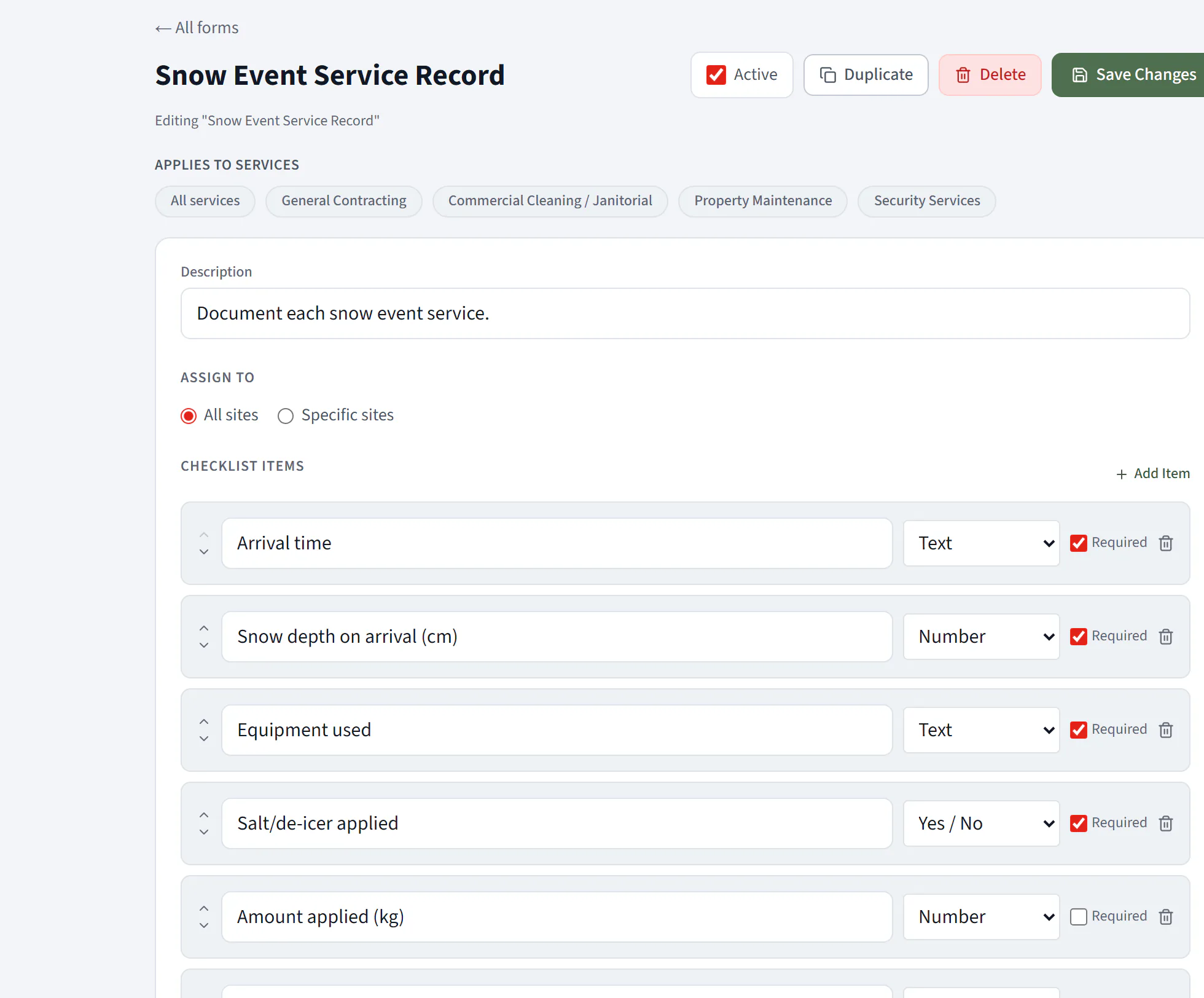
You build the service record. The fields that defend a claim, arrival and completion time, snow depth, salt applied, sidewalks, and a photo, set once and captured on every property, every event.
The record is yours to define. Every property, every storm, is documented to the standard you set.You build the service record. The fields that defend a claim, arrival and completion time, snow depth, salt applied, sidewalks, and a photo, set once and captured on every property, every event.
What the system can prove happened

Every property gets a timestamped service record, every event.

  1. 1The operator starts the route and services each property, logging arrival time, snow depth on arrival, the equipment used, and the completion time, so the record carries the timing a claim turns on.
  2. 2Salt and de-icer are recorded per property, applied and how much, alongside a photo of the cleared lot, so "we salted it" is documented, not asserted.
  3. 3Each service record is filed from the property and lands dated and attributed, so months later you can produce exactly what was done, when, at the lot in question.
Real product, real screens

See it happen.

app.crewos.ca/forms
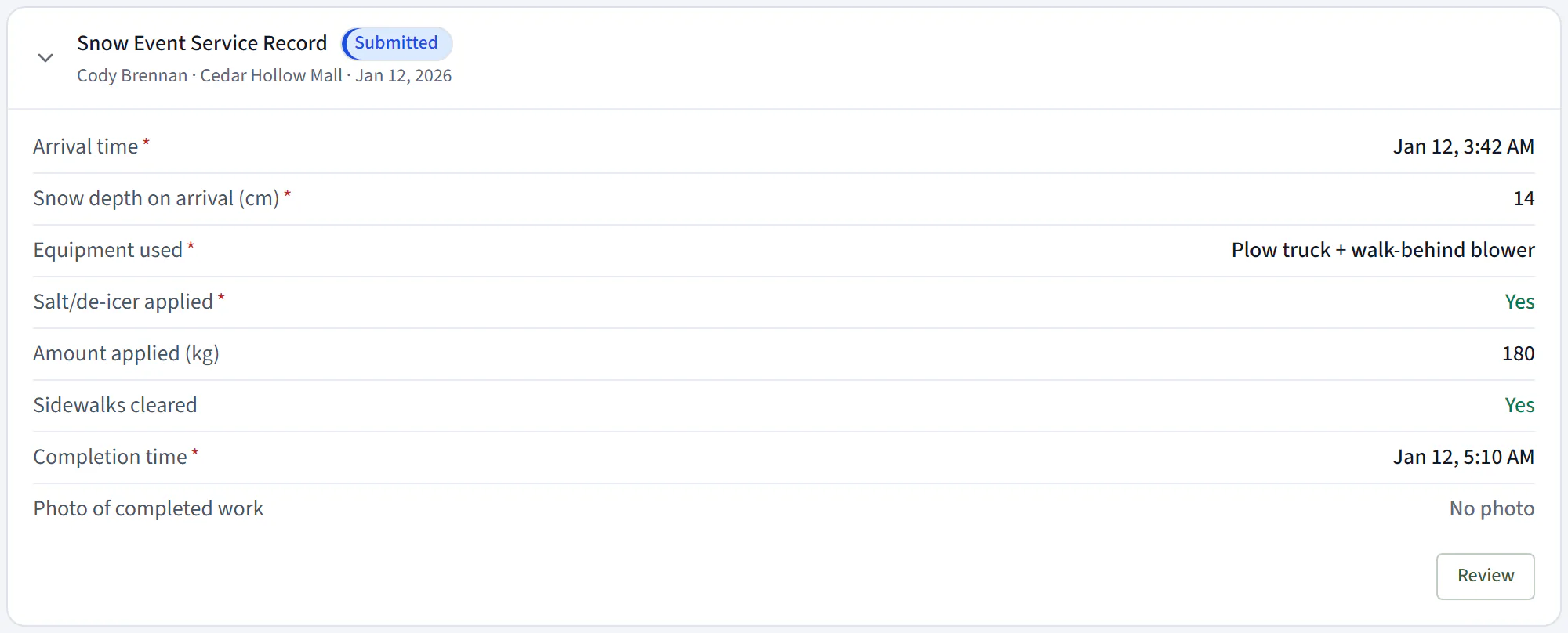
A real service record at Cedar Hollow Mall for the Jan 12 event: arrived 3:42 a.m. with 14 cm on the ground, plowed, salted with 180 kg applied, sidewalks cleared, finished 5:10 a.m. The night's work as a timestamped record.
This is the record a slip-and-fall claim turns on. Arrival, snow depth, salt applied, and completion time are captured on the property, so what you did that night is provable in April.A real service record at Cedar Hollow Mall for the Jan 12 event: arrived 3:42 a.m. with 14 cm on the ground, plowed, salted with 180 kg applied, sidewalks cleared, finished 5:10 a.m. The night's work as a timestamped record.
The direct answer

How do I prove a parking lot was cleared and salted after a snow event?

CrewOS captures a service record for every property on every snow event, with the arrival time, snow depth on arrival, equipment used, whether salt or de-icer was applied and how much, whether sidewalks were cleared, and the completion time, plus a photo. Each record is filed from the property, dated and attributed, so a cleared and salted lot is provable long after the storm.

The times, amounts, and photo are captured on the property as the work happens, not written up later, so the record stands as contemporaneous documentation when a claim is reviewed.

The outcome

When the claim comes, you have the night on the record.

The slip-and-fall conversation changes when you can produce the service record: arrived at this time, this much snow, salted with this much, cleared by this time, with a photo. You defend with contemporaneous documentation, not a driver's memory, and the claim that would have settled gets fought.

One platform, your words

Configured in Snow & Ice terms, out of the box.

SiteProperty
Crew memberOperator
ShiftService
ClientAccount
ScheduleRoute
Questions

What operators ask before they switch.

Isn't a route sheet or an invoice enough to defend a claim?
No. An invoice says you billed for a visit; it does not show when you arrived, how much snow was down, whether you salted, or when you finished. CrewOS captures those on the property at the time, so the record is contemporaneous documentation of the event, which is what a slip-and-fall defense turns on.
What if the operator forgets to record a property?
Then that property has no service record for the event, and the gap is visible while you can still act, not months later when a claim arrives. The point is to surface the missing record the night of the storm, not in a deposition.
Can I capture salt amounts and snow depth, not just that we showed up?
Yes. The service record captures arrival time, snow depth on arrival, equipment used, salt or de-icer applied and the amount, sidewalks cleared, and completion time, plus a photo. You decide the fields, so "serviced" means the details that defend a claim were recorded.
Is this different from GPS tracking the trucks?
Yes. GPS shows a truck passed a lot. It does not show the snow depth, the salt applied, or the condition the lot was left in. The service record documents what was actually done on the property, which is the evidence a claim is decided on.

Run your crew like you've got it together. Because now you do.

Set up your first site in an afternoon. Free to start, no card required.